Why, in modern perfumery, the real value is a decision-making system
“Full service” is one of the most used, and most misunderstood, expressions in the perfumery world.
It is often interpreted as a promise of operational completeness:
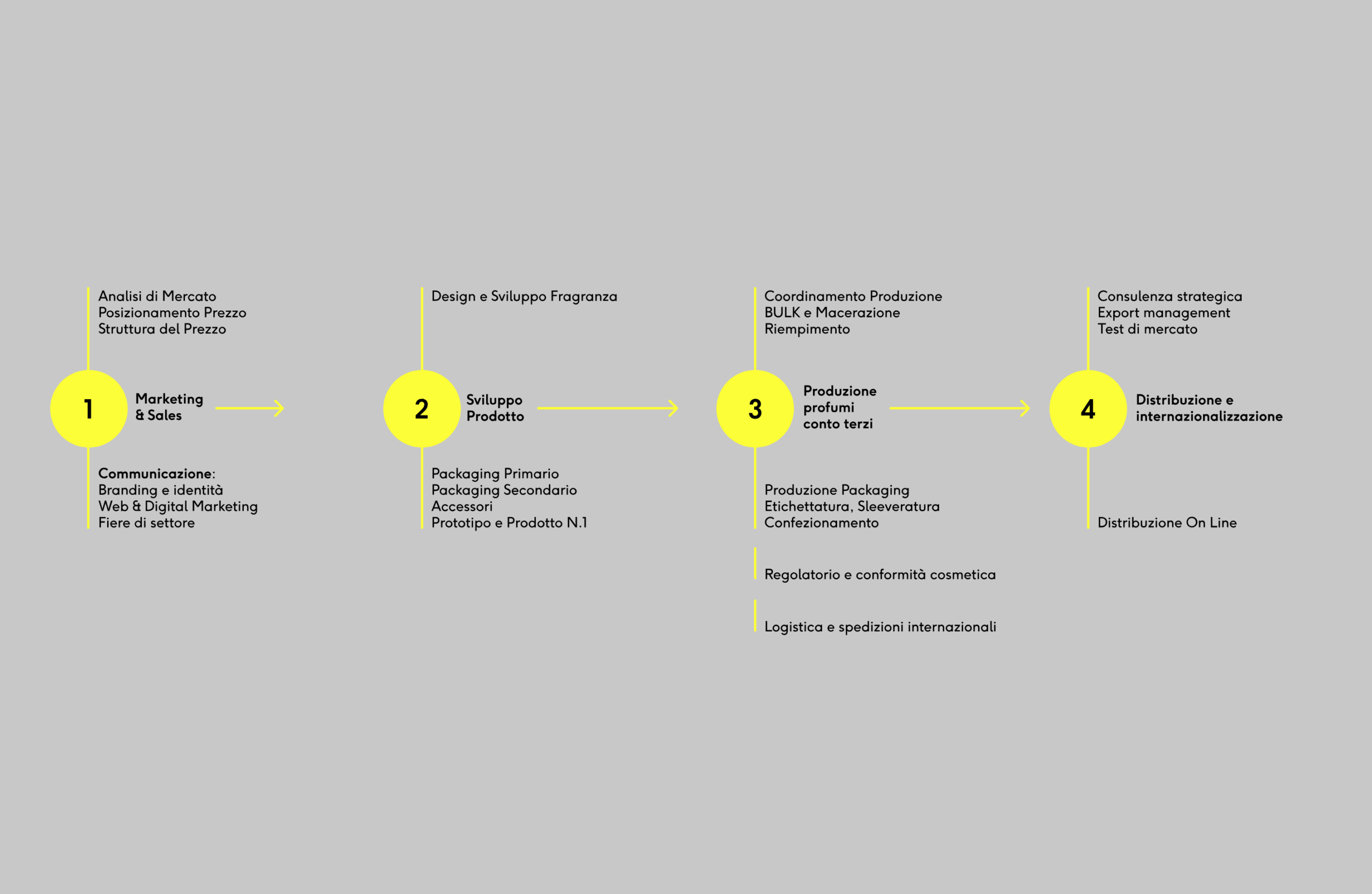
design, fragrance development, production, packaging, filling, logistics, regulatory. All included.
But this definition, however widespread, is reductive. Above all, it does not explain why many “full service” projects still fail. The problem is not what gets done. It is how decisions are made.
The limits of traditional full service
In the most common model, full service is a sum of activities. Each stage is handled properly, often even with excellent suppliers.
Yet the end result is fragile.
Why? Because decisions are made in sequence, not in relation to each other.
The price is defined after the product.
Packaging is adapted to a cost that is already fixed.
Production is optimized once the design is already locked.
And distribution is considered when everything has already been decided.
In this scheme, each choice is technically correct, but the system as a whole is not coherent.
Complexity increases. Corrections become expensive. The risk of failure moves further and further downstream.
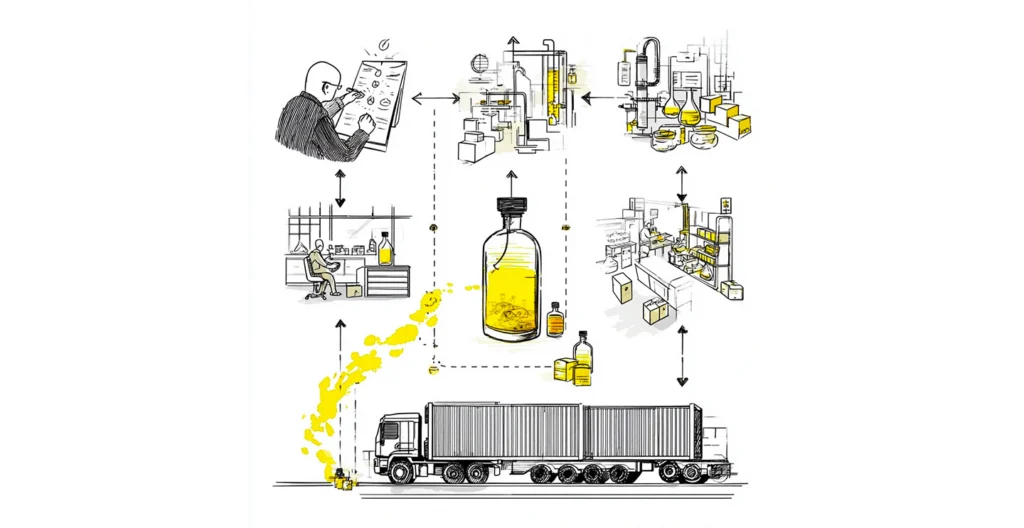
Full service as a decision-making system
A real full-service approach does not come from execution. It starts upstream, in the way decisions are linked together.
When you start from the market:
-
retail price is not an outcome, but an initial constraint
-
positioning is not a slogan, but an operational guide
-
design is not aesthetics, but trust-building
-
production is not a problem to be solved, but a lever to be governed
Full service, in this sense, is not about “doing everything”. It is about making fewer mistakes before they become costly.
Reduce complexity before it emerges
One of the most interesting paradoxes is this: good full service makes projects simpler, not more complex.
When decisions are aligned from the beginning:
-
design requires fewer revisions
-
production runs without friction
-
logistics is predictable
-
the go-to-market is more fluid
This does not happen because the project is easier. It happens because the system is clearer. Clarity, in a perfumery project, is a huge competitive advantage.
From control to anticipation
Many brands look for control: control of costs, suppliers, timing. But control always comes after a decision has been made. The real value of a mature full service is anticipation.
Anticipating:
-
where a price will not hold
-
where packaging will create friction
-
where a production choice will limit scalability
-
where the brand will lose consistency
This kind of work is not visible. You cannot photograph it. It is not easy to tell.
But it is what makes the difference between a project that works and one that “looks well made” but does not perform.
Why full service is above all a culture
In the end, full service is not an operating model. It is a design culture.
A culture that:
-
prioritizes upstream decisions
-
connects disciplines instead of separating them
-
accepts complexity in order to reduce it, not to manage it later
In this sense, full service is not for everyone. It requires time, method and responsibility. But when applied correctly, it produces a clear effect: results do not seem random. They seem inevitable.
Conclusion
In today’s market, the winner is not the one who does everything. It is the one who decides better. And deciding better, in contemporary perfumery,
means building a system in which each choice reinforces the others.
This is the deeper meaning of full service today. Not a list of activities. A way of thinking.
Editorial note – Insight Journal
This article is not a case for “doing more”, but a reflection on how to do better, earlier.
In an increasingly crowded industry, execution quality is the entry ticket. Decision quality is what creates value.