An honest look at an asset the international market keeps wanting to buy
Made in Italy is one of the most powerful expressions in the global perfumery market.
It is also one of the most abused.
Not because those who use it are lying. But because it is often not really understood, neither by those who sell it nor by those who look for it.
Understanding what producing in Italy actually means, and why it has real value in international markets, is the starting point for building a project that lives up to that promise.
What the international market means when it looks for Made in Italy
When an international buyer — Asian, Middle Eastern, American — looks for a Made in Italy perfume, they are not buying a flag. They are looking for a system of guarantees.
They are looking for a recognizable value chain, a verifiable manufacturing tradition and a level of craftsmanship their home market cannot replicate.
The perception of Made in Italy in perfumery is built on decades of iconic brands and a history of excellence in glass, closures and fragrance composition. It is a reputational asset that belongs to the whole industry.
But a label alone does not transfer that value. It has to be backed by production that makes it credible.
Where Made in Italy really counts in the production process
The manufacturing value of Made in Italy is not uniform along the supply chain. There are areas where Italian excellence is structural and recognizable to industry professionals.
Primary glass is one of them. The design and manufacture of bottles in Italy, especially in certain glass districts, delivers a quality of finish and a level of customization that are hard to replicate elsewhere.
Fragrance formulation is another. Some of the most internationally respected fragrance houses operate in Italy or work through Italian partnerships. The formulation know-how built up in certain districts is a concrete asset.
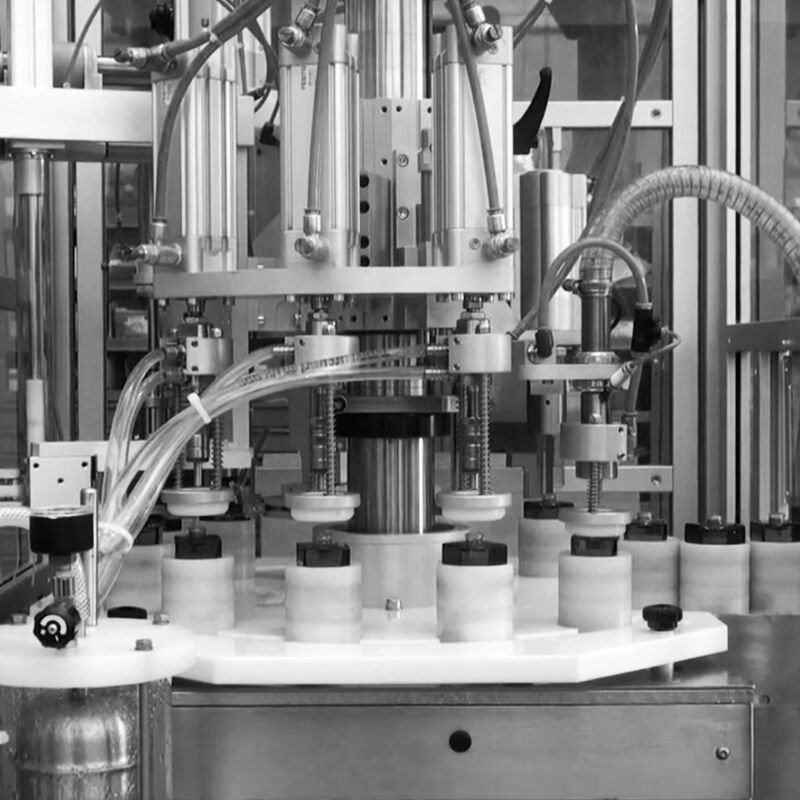
Filling, packing and quality control, when handled by industrial operators with luxury experience, add a level of reliability the premium market recognizes in the finished product.
Where Made in Italy is just a label
Some projects carry the Made in Italy claim while only the final packing happens in Italy. The fragrance is developed and produced elsewhere. The bottle is imported. The box is assembled in Italy.
It is not illegal. But it is not the Made in Italy the international market is buying either.
This is not a moral judgment. It is a strategic consideration.
Building a brand on a promise the product does not fully back up exposes the project to an unmanageable reputational risk. Especially in markets where buyers run due diligence on the supply chain.
How Made in Italy becomes a structural competitive advantage
A brand that wants to use Made in Italy not as a claim but as a positioning must build its supply chain in a way that is consistent with that promise.
This means choosing component suppliers based on their origin and production level, not just price. It means documenting the supply chain in a transparent and verifiable way. It means being able to show international buyers not just the label, but the process.
Brands that do this do not compete on price. They compete on credibility.
And in the premium perfumery market, credibility is worth far more than any short-term cost advantage.
When Made in Italy becomes a real commercial lever
Made in Italy stops being a label and becomes a commercial lever when it is backed by three concrete elements.
The first is supply chain traceability: knowing exactly where each product component was developed, produced and assembled.
The second is consistency between the positioning you communicate and the real production process. Not everything has to be made in Italy. What is declared Made in Italy has to really be so.
The third is the ability to tell the story professionally in B2B settings. A brand that can explain its supply chain to an international buyer already has a competitive edge over one that stops at the label.
Conclusion
Made in Italy in perfumery has value. A lot of it.
But it is not automatic. It is not enough to declare it. You have to build it.
Brands that invest in consistency between the promise of Made in Italy and the reality of production are not just protecting a claim. They are building a positioning that is difficult to attack and difficult to replicate.
And in a market where differentiation is everything, this is exactly the kind of advantage that lasts.
Editorial note — Insight Journal
Made in Italy is not a free ride. It is a responsibility. Brands that take it seriously build something real. Those that use it only as a label get found out by the market, sooner or later.