
When production flexibility becomes a competitive advantage
Niche perfumery has a very common dynamic: brands with a strong creative identity end up working with rigid industrial structures.
Long lead times. High MOQs. Poor flexibility.
Many founders accept this as the way the industry works. In this project, the starting point was different.
The context: an established niche brand
Francesca is the founder of a well-known Italian niche perfume brand, with a clear vision, a strong identity and well-defined positioning. But its production structure had gradually become a constraint.
Not in terms of quality, but in terms of:
-
flexibility
-
lead times
-
volume management
The real problem: industrial rigidity
As often happens in the industry, Francesca was working with highly structured suppliers. The result was an efficient system… but not a very adaptable one. In particular:
-
high MOQs on components
-
long lead times
-
difficulty matching quantities to the brand’s real needs
This leads to a very concrete consequence: the project grows, but loses agility.
The approach: listening before optimizing
The work didn’t start with the numbers. It started with listening, to understand:
-
the brand’s growth model
-
how often it launches
-
its real stock needs
-
the level of flexibility it needs
Only then could we work on the system.
The levers we used
We worked on the main industrial components:
-
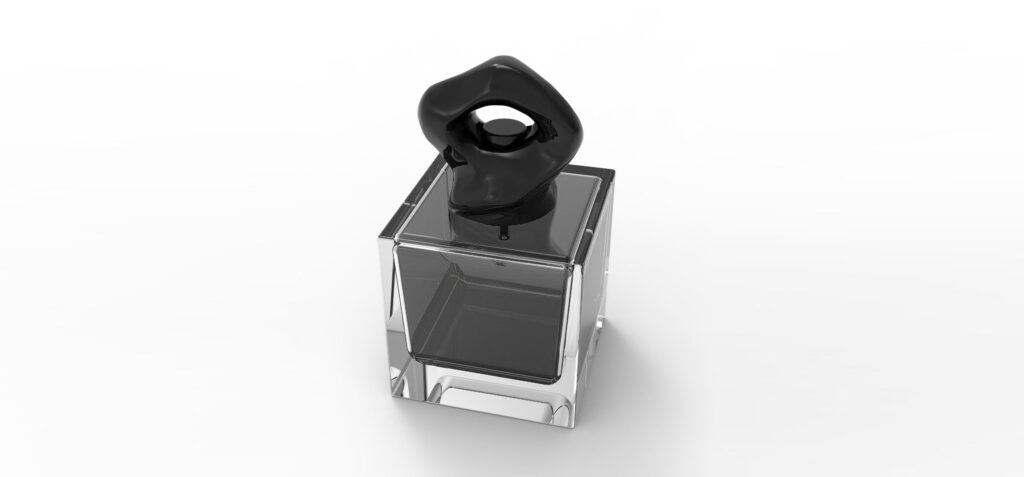
caps
-
spray pumps
The goal wasn’t to change. It was to optimize.
Maintaining, and in some cases improving, quality while reducing rigidity and complexity.
The results
The result was a more efficient system, more consistent with the brand’s model. In particular:
-
significantly lower MOQs
-
lead times cut by up to 40%
-
costs in line, but on far more flexible volumes (up to 6x lower)
And in some cases, even higher perceived quality.
The real point: the structure, not the component
This project isn’t just about caps, pumps or glass. It’s about something deeper:
the industrial structure behind the brand. Because the real limit is often not the product. It’s the system behind it.
A more flexible model is possible
One of the most widespread beliefs in the industry is that high quality = industrial rigidity.
This project proves the opposite. It is possible to build systems that are:
-
robust in quality
-
economically sustainable
-
operationally flexible
Without compromising positioning.
Founders and industry: a necessary balance
For a founder, the ability to adapt the project quickly is critical.
New launches. Market testing. SKU optimization.
If the industrial structure can’t keep up with that pace, it becomes a brake.
Conclusion
This project confirmed something very clear to us: perfumery doesn’t have to follow rigid, traditional models. There is room for smarter, more flexible approaches that fit the way brands are born and grow today.
When the industrial structure adapts to the project, and not the other way round, the brand gets its speed back. And speed, when it is well designed, becomes a real competitive advantage.
Greater creative freedom, time saved, lower costs and less capital tied up, with the coordination of the whole operation outsourced
Development of a new cap mould and coating, optimisation of MOQs and costs, compatibility testing, alignment with the production and sales pipeline