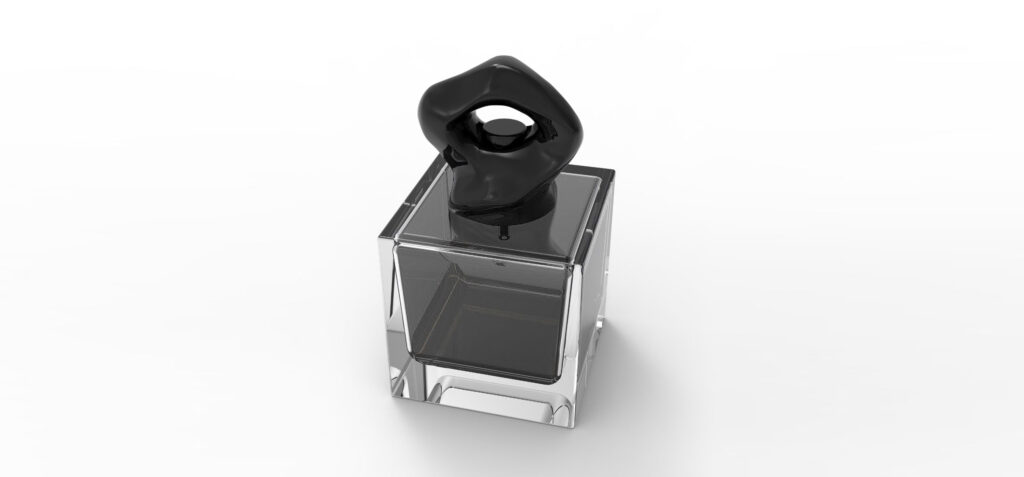
When sell-out isn’t a goal, but the result of a system built upstream
In contemporary perfumery, success is often told through the numbers.
Sales, speed, volume, results.
It’s an understandable story, but a misleading one.
Because numbers alone explain nothing. They are just the last visible sign of a series of decisions made much earlier.
The project we developed with Tony is interesting for exactly this reason:
it wasn’t built to “sell a lot”, but to hold up in the market.
And when a project is built to hold up, the market responds.
Where the project really began: price as a strategic constraint
The first decision wasn’t about the fragrance. Nor the design. Let alone production.
The starting point was the retail price.
In a direct online launch, especially through social commerce channels, price isn’t the last variable to set.
It is a structural choice.
The price defines:
-
the customer’s level of expectation
-
perceived value
-
the design freedom (or limits)
-
the sustainability of the model over time
Starting from price imposed a precise discipline on the project. It ruled out some paths from the very beginning.
And precisely because of that, it made the following decisions clearer.
Designing not to “look nice”, but to reduce risk
The design phase took almost six months of work.
Seen from the outside, that might look excessive. In reality, it was time invested to reduce the risk, not to add complexity.
Every design choice, materials, proportions, weight, finishes, sizes, was assessed by asking the same question:
Does this decision make the customer’s choice easier or harder?
Design wasn’t used as a means of self-expression. It was used as a decision-making tool.
In a digital setting, where the product is judged before it is even touched, design becomes the first layer of trust. And trust, even before desirability, is what enables the purchase.
Sizes, weights and logistics as part of the experience
One of the least visible but most decisive parts of the project was defining the sizes.
The choice to develop:
-
a size of 10 ml
-
and a size of 50 ml
wasn’t driven by product-portfolio logic, but by system-level considerations.
Overall weight, footprint, shipping, handling, post-purchase experience:
each variable was analyzed as an integral part of the brand experience.
Because the experience doesn’t end at checkout. It starts there.
A project that ignores these aspects may still sell. But it will struggle to scale without friction.
Production as a stage of responsibility, not compromise
By the time the project went into production, many decisions had already been made. And that completely changed the role of the production stage.
Production wasn’t a moment of compromise. It was a moment of responsibility.
Responsibility toward:
-
the brand’s margins
-
the repeatability of the model
-
sustainability over time
The goal wasn’t to “do as much as possible”, but to build a production system that wouldn’t put the brand under pressure with every reorder.
The launch and the market response
The launch took place directly online, through social commerce channels. No intermediate steps. No distribution through traditional channels.
The market response was immediate.
Not as a surprise, but as confirmation.
Confirmation that when:
-
the price is credible
-
the design is consistent
-
the experience is seamless
-
the system was designed upstream
customers don’t need convincing. They decide.
What Tony’s project teaches us
This project proves an often uncomfortable truth: sell-out isn’t a goal to chase.
It is an indicator.
It shows that the system worked. That the decisions made upstream were right. That the project was clear, credible and accessible at the right moment.
When sell-out is treated as a goal, people look for shortcuts.
When it’s treated as a consequence, people build systems.
And only within systems do brands manage to last.
Conclusion
Tony’s project isn’t interesting because of the end result. It’s interesting because of the journey.
Because it shows that, in contemporary perfumery, the real value lies not in the individual product, but in the quality of the decisions that precede it.
And that is where a brand stops chasing the market and starts getting chosen.
Editorial note – Insight Journal
This article doesn’t tell a success story. It describes a method.
Because the method, not the result, is what makes a project replicable