Often it’s the system that needs rethinking.
When lead times, quality or costs are no longer good enough, switching perfume manufacturers seems like the most obvious fix. But a manufacturing transfer only solves the problem if the cause really lies in the factory. If the issues stem from late forecasts, packaging that is hard to industrialize, inconsistent MOQs, unsynchronized suppliers or fragmented responsibilities, the new manufacturer is likely to inherit exactly the same system. So before transferring production, you need to separate a production problem from a problem of industrial architecture.
Signs of a genuine manufacturing problem.
Repeated, unexplained delays, unstable quality, insufficient capacity, poor traceability, ineffective communication or an inability to support future volumes are signs that may make a change of manufacturer necessary. But they need to be analyzed with data: on-time performance, scrap, non-conformities, lead times, capacity and rework costs.
When the problem lies outside the factory.
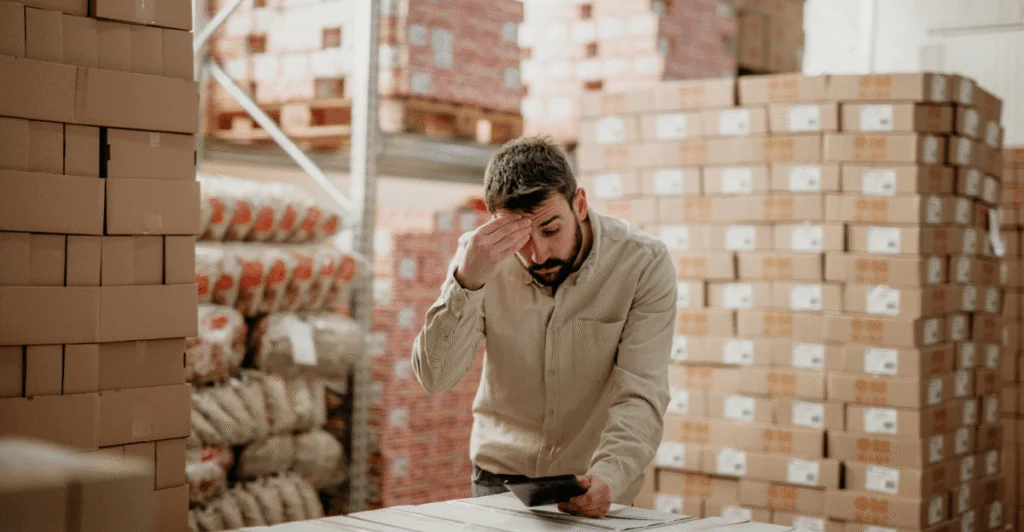
If components arrive late, specifications keep changing or the forecast is shared when capacity is already fully booked, even an excellent contract manufacturer will struggle. The same goes for packaging with too many special finishes, or for a supply chain whose suppliers’ lead times aren’t compatible. In these cases, replacing the filler changes one node, not the system.
How to prepare a manufacturing transfer.
An effective transfer starts by mapping the formula, components, artwork, specifications, tests, quality standards, suppliers, tooling, existing stock and regulatory requirements. Then you need a validation plan: samples, compatibility, line trials, golden sample, AQL criteria and a phase-in/phase-out timeline. The transfer must protect business continuity while the production infrastructure changes.
Keep what works.
Changing manufacturers doesn’t mean changing the whole supply chain. A brand may have an excellent fragrance house, a reliable glass supplier or a strategic packaging supplier. A new industrial platform should be able to integrate these partners, replacing only the weak links. This reduces risk, time and loss of know-how.
The End-to-End perspective.
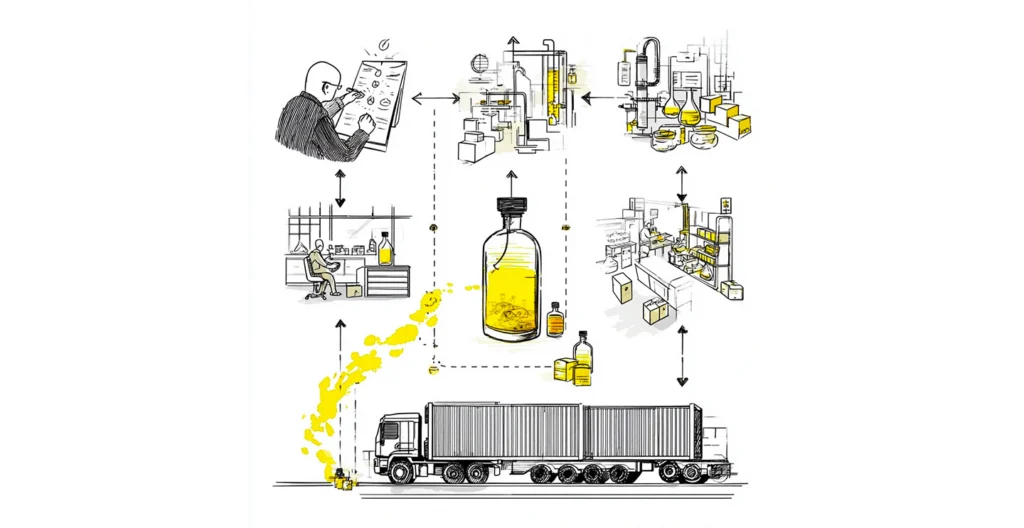
An End-to-End approach turns the manufacturing transfer into an industrial assessment. First you analyze market, volumes, product, procurement, production, quality and logistics; then you decide what to transfer and what to keep. BOLD can work on a single phase or as General Contractor, also integrating the client’s existing suppliers. The goal isn’t to change factories on principle, but to build an architecture that can sustain the next stage of growth.
A method for deciding whether to transfer production.
Before opening a tender among new manufacturers, it helps to build a scorecard of the current system: OTIF, quality, capacity, lead times, communication, costs, flexibility and risk. For each problem, the cause needs to be identified. Only those attributable to the manufacturer should fall within the scope of the transfer; the others call for action on product, procurement or planning. The next step is to define a transition plan with milestones, safety stock and acceptance criteria for the new process.
A practical example.
A brand may find that filling is on time but production starts late because the cartons consistently arrive after the glass. In that case, changing the filler won’t improve on-time delivery. What’s needed is to redesign the planning or to work on the critical supplier.
Key takeaways.
– Changing manufacturers should start with a diagnosis, not a quote.
– A new manufacturer won’t automatically fix inefficient forecasts, MOQs or packaging.
– The transfer must protect quality, continuity and compliance.
– Good suppliers can be kept and integrated.
– The ultimate metric is the performance of the system, not of a single node.
FAQ
When should you change perfume manufacturers?
When capacity, quality, lead times, service or cost structure are no longer compatible with the brand’s goals and the problems can be traced back to the production model.
How complex is it to transfer perfume production?
It depends on the formula, packaging, tooling, testing, documentation and markets. A structured transfer requires a technical assessment and validation phase before moving to full-scale production.
Can I keep my fragrance house and change only the manufacturer?
Yes, when agreements and documentation allow it. An End-to-End platform can coordinate a fragrance house the brand has already chosen.
Conclusion
Changing manufacturers can be a major decision. But the real leap comes when the brand uses that moment to redesign its industrial system. Moving production isn’t enough: you have to remove the causes that made the previous setup fragile.