The integrated model to build, produce and grow beauty brands
In beauty and perfumery, creating a product is not just about producing it.
A perfume, a cosmetics line or a home fragrance collection does not come only from a formula, a bottle or a box.
It comes from a set of decisions that have to work together.
Positioning.
Price.
Design.
Formula.
Packaging.
Production.
Regulatory.
Logistics.
Distribution.
Communication.
When these stages are managed separately, the project becomes more complex, slower and riskier.
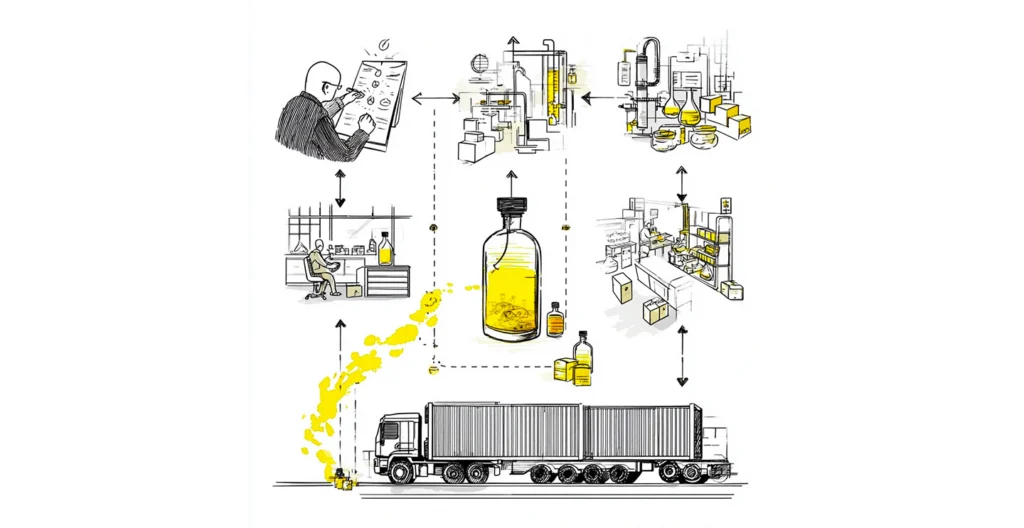
That is why BOLD built a different model: an End-to-End Manufacturing Platform for fragrance and beauty brands.
A single operating platform that takes brands from strategy to production and on to international logistics.
What End-to-End Platform means
“End-to-end” means that BOLD can manage the whole development path of a beauty project.
Not just a phase.
Not just production.
Not just packaging.
But the whole system.
This gives the client a single partner able to coordinate the key decisions of the project, avoiding fragmentation, delays and gaps between what the brand wants to be and what the product actually becomes.
In simple terms:
BOLD helps a brand understand what it needs to do, how to do it, what it should cost, how it should be produced and how it can be distributed.
The four functions of the BOLD platform
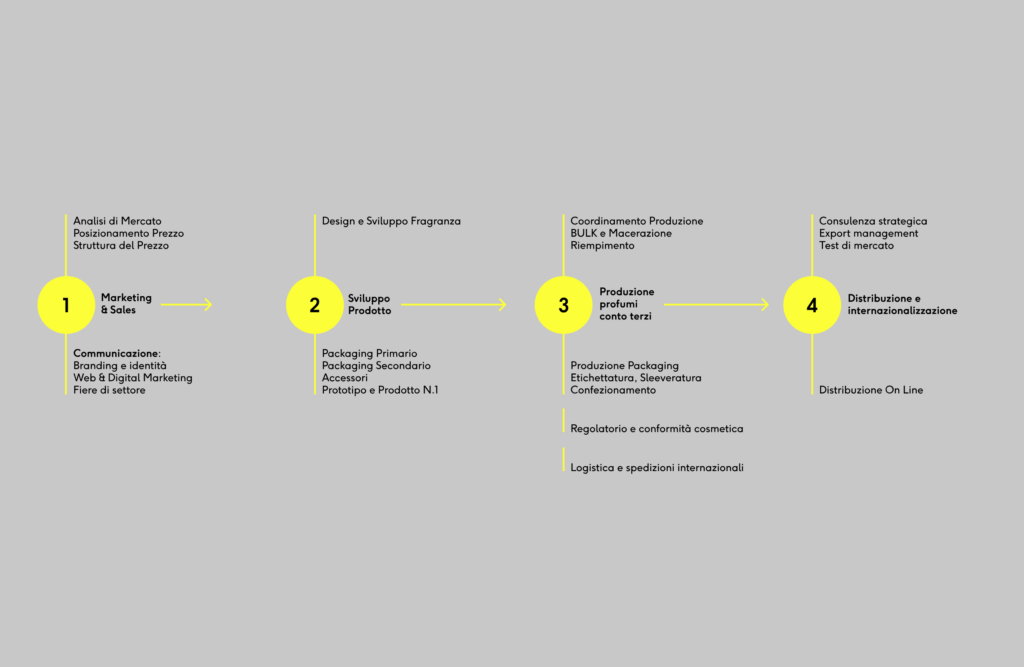
The BOLD platform is built around four functions, which can be used on their own or combined:
- Marketing & Operations
- Product development
- Industrial Manufacturing Platform
- Global Logistics Platform
Together, these four functions turn an idea into a concrete project that can be manufactured, sustained and scaled.
1. Marketing & Operations
Market first, then product
The first function is Marketing & Operations. It means every project starts from the market, not from production.
Before talking about bottles, caps, formulas or suppliers, BOLD works to understand:
- what position the brand wants to hold in the market;
- what type of customer it is aimed at;
- what retail price it has to support;
- what level of quality it has to convey;
- what experience it has to offer;
- what business model it has to support.
This step is fundamental.
Because a product can be technically sound and still fail in the market if it is not consistent with the brand.
A 150-euro perfume cannot be built with the same features as a 35-euro one.
A premium line cannot have the same production structure as a mass-market product.
A brand sold online does not have the same needs as a brand distributed in physical retail.
This stage exists precisely to prevent these mistakes.
Production should not drive the brand. It should support it.
Why starting from the market matters
Many beauty projects fail not because the product is wrong, but because the decisions are not aligned.
The packaging says one thing.
The price says another.
The communication promises a level that production cannot deliver.
Logistics does not fit the sales channel.
The result is a fragile project. That is why BOLD works to build consistency before execution.
It means setting a clear direction before entering the industrial phase: market analysis, positioning, retail price and margin structure, range architecture and industrial cost optimization.
The outcome of this stage is the project analysis.
2. Product development
From idea to the first approved sample
The second function is Product development: this is where the idea becomes a product defined down to the last detail.
BOLD coordinates:
- fragrance development with international fragrance houses;
- primary and secondary packaging;
- product engineering;
- compatibility and stability testing;
- IFRA and PIF.
The outcome is Product Sample N.1: the approved sample that becomes the reference standard for production.
3. Industrial Manufacturing Platform
Made in Italy manufacturing, run as a single flow
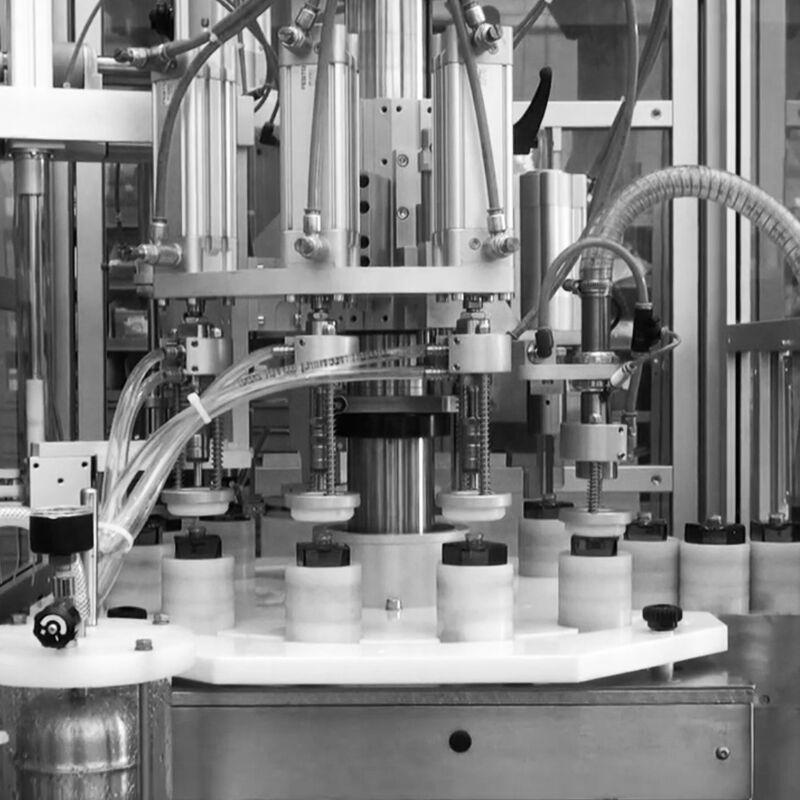
The third function is the Industrial Manufacturing Platform. This is the industrial side of the BOLD model, where the project becomes a real product through the Italian manufacturing supply chain we coordinate directly, to ISO 9001 and GMP standards.
BOLD coordinates every stage needed to reach the finished product:
- purchasing and supplier coordination, whether the brand’s suppliers or BOLD’s;
- bulk and maceration;
- filling;
- assembly and packing;
- incoming, in-process and final quality control, with AQL and traceability;
- regulatory documentation.
The main advantage is simplicity. The client does not have to coordinate the fragrance house, glass supplier, cap supplier, printer, filler, packer and logistics separately.
BOLD manages the flow.
Volumes range from 5,000 to over 5,000,000 units per order, on automatic and semi-automatic lines.
4. Global Logistics Platform
Production does not end when the product is ready
The fourth function is the Global Logistics Platform.
Many think a project ends once the product has been made. In reality, for a brand that wants to grow, that is only the beginning. The product has to be stored, handled, shipped, cleared through customs and distributed in the right markets.
That is why BOLD has built an international logistics platform, with hubs in Italy and Switzerland and bonded warehouses, designed to support brands that sell in several markets.
What the logistics platform does
The Global Logistics Platform makes it possible to manage:
- international storage;
- bonded warehouses;
- shipments to different markets;
- export documentation and customs;
- B2B and e-commerce fulfillment;
- flow optimization;
- greater operational control;
- better working capital management.
Put simply: it saves the brand from rethinking logistics from scratch every time it sells in a new country.
For non-EU brands there is also a tax advantage: stock held in Switzerland does not incur Italy’s 22% VAT, which is paid only when the goods enter the EU market.
This is particularly important for brands operating across Europe, the GCC, Asia, the United States, and other international markets.
Why logistics is part of the strategy
Logistics is not just an operational matter. It is part of the business model.
If a product arrives late, the brand loses credibility.
If logistics costs are too high, the margin shrinks.
If stock is poorly managed, capital gets tied up.
If reorders are slow, the end customer cannot find the product.
That is why logistics has to be planned from the start. In the BOLD model, production and logistics are not separate. They are part of the same system.
Three collaboration models
The four functions come together in three collaboration models.
Launch Program: from idea to market-ready product, for new collections or new brands.
Growth Program: higher volumes and optimized costs for brands already on the market, with BOLD as General Contractor for the entire supply chain.
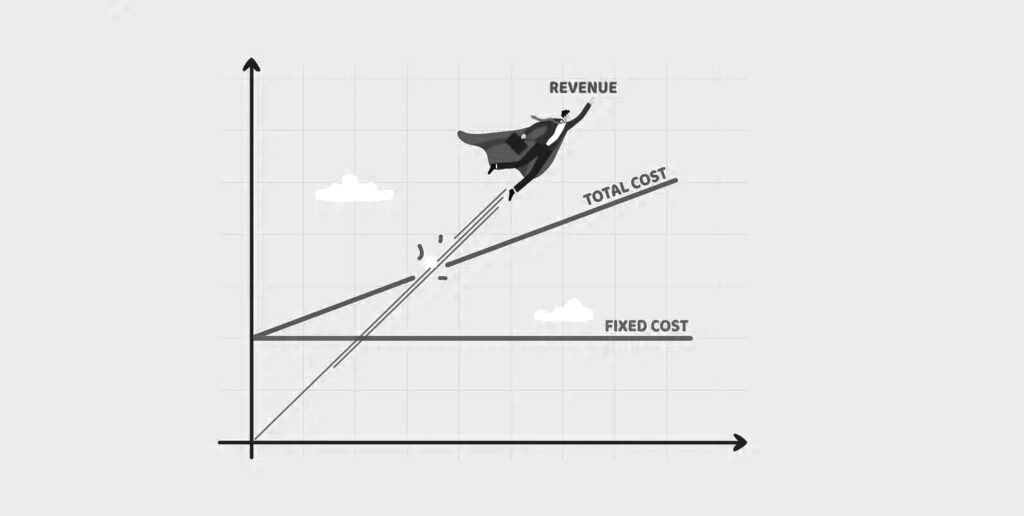
Private Production: dedicated production capacity (lines, people, planning) within BOLD’s industrial ecosystem, for ongoing, structured programs, without the fixed costs of an in-house plant.
It is not simply contract manufacturing. It is a form of industrial partnership.
A brand can also entrust BOLD with a single function: development only, production only, supply chain coordination only, or logistics only.
Not every brand has the same needs. That is why BOLD does not offer a single model. It offers the model that best fits the project.
Who the BOLD model is for
The BOLD platform is designed for several types of clients.
New brands with a clear vision
Founders or companies that want to launch a beauty project with a structured plan, a defined budget and a professional setup from day one.
In these cases, BOLD helps turn the idea into a concrete project, avoiding costly mistakes at the start.
Established brands
Companies that have already produced, sold or tested the market, but want to improve:
- costs;
- lead times;
- quality;
- MOQ;
- production continuity;
- supplier management.
In these cases, BOLD works on optimizing the system.
Structured companies
Groups, retail chains, international brands or companies with larger volumes looking for a partner able to manage complexity, scale and diverse markets.
In these cases, BOLD becomes an operating platform to support growth.
The real value of the End-to-End model
The value of the BOLD model is not “doing everything”. The value is connecting everything.
Because in a beauty project, every decision influences the others.
Price affects the packaging.
The packaging affects production.
Production affects lead times.
Lead times affect the launch.
Logistics affects the margin.
The margin affects the sustainability of the project.
If these decisions are made separately, the risk increases. If they are managed within a single system, the project becomes more robust.
Why BOLD is not just a manufacturer
A manufacturer makes what it is asked to make. BOLD starts working before production does.
It helps define:
- what makes sense to produce;
- at what quality;
- at what price;
- in what volumes;
- with what industrial structure;
- with what logistics model;
- with what commercial goal.
That is why BOLD defines itself as an end-to-end platform. Not because it replaces the brand’s work, but because it supports it with a structure that brings strategy, industry and logistics together.
A platform to reduce complexity
Growing in beauty means managing complexity.
More products.
More markets.
More suppliers.
More regulatory constraints.
More stock.
More decisions.
The risk is that complexity slows the brand down and drains internal energy. The BOLD model was created to reduce that complexity.
A single partner.
A single system.
A single workflow.
From strategy to production. From production to logistics. From logistics to international growth.
Conclusion
Today the beauty market demands far more than the ability to produce well. It demands coherent, sustainable and scalable projects.
That is why BOLD has developed an End-to-End Manufacturing Platform for fragrance and beauty brands, built on four functions:
Marketing & Operations
to build the project starting from the market, positioning and margins.
Product development
to arrive at Product Sample N.1, the approved standard for production.
Industrial Manufacturing Platform
to manufacture in Italy in a single controlled flow, from bulk to finished product.
Global Logistics Platform
to support international distribution and growth in global markets.
In this way BOLD does not just produce beauty products. It helps brands build systems that work, grow and last.