Why quantity is never just a matter of volume
One of the most frequently asked questions in the perfumery world is also one of the most misleading:
“How many units do I need to produce to get started?”
The answer many expect is a number. The real answer is: it depends on the system you’re building.
In the industry, the issue of quantity is often approached superficially, as if “starting small” is enough to reduce risk. In reality, in many cases, starting too small increases the risk.
The myth of micro-batches
Producing only a few units is often seen as the prudent choice. Less upfront investment, less exposure, more flexibility.
But in practice:
-
unit costs go up
-
margins shrink
-
suppliers become less available
-
the quality of the project suffers
A micro-batch is not safer. It is simply less tolerant of error.
Quantity as an industrial lever
In a perfumery project, quantity is not just about “doing volume”. It is there to:
-
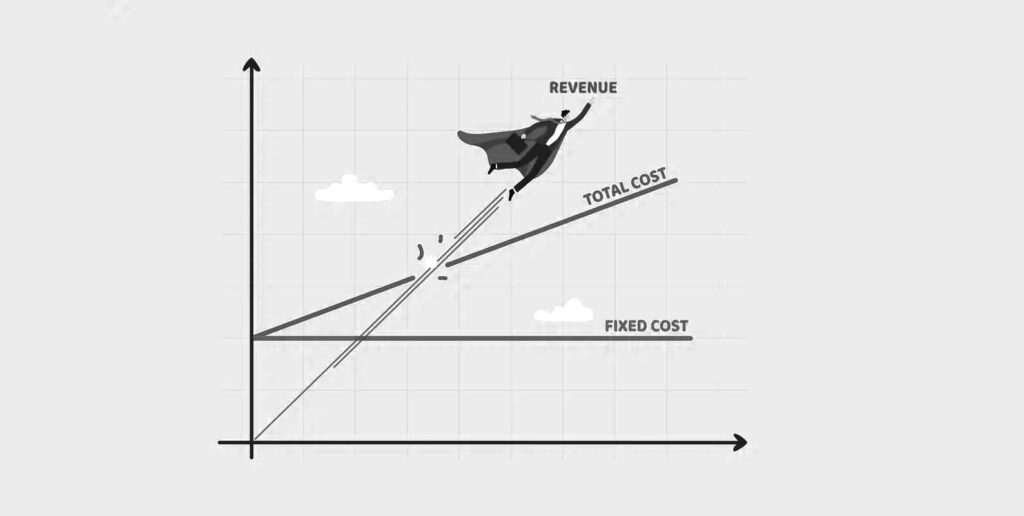
absorb fixed costs
-
stabilize production
-
make the project replicable
-
improve the overall quality
Below a certain threshold, the project has no room to breathe. Every mistake weighs too heavily.
There is no universally right quantity
The right quantity depends on specific variables:
-
sales channel
-
retail price
-
cost structure
-
positioning
-
medium-term objectives
A project sold online does not follow the same logic as one sold in retail. A high price point tolerates different volumes than an accessible one.
Asking “how many units are needed” without defining the context is like asking “how big should a house be” without knowing who will live in it.
The first batch is not a test, it is a message
The first batch communicates many things, even if we do not realize it:
-
it shows how much the brand believes in the project
-
it signals solidity to partners
-
it signals reliability to suppliers
A first batch that is too small often signals uncertainty. And in the market, uncertainty shows.
The hidden problem of reorders
Many projects are built with only the first batch in mind. Very few think seriously about the reorder.
Yet:
-
the second batch is the one that decides whether the project is replicable
-
the first can run on enthusiasm
-
the second only works if the system holds
If the project does not improve at reorder — in cost, lead time and smoothness — the initial quantity was wrong.
When small quantities make sense
There are cases where starting with small quantities is the right call:
-
experimental projects
-
genuine limited editions
-
highly targeted market tests
But even in these cases, the limits must be deliberate, not imposed.
Starting small works only when:
-
the model is clear
-
costs are under control
-
the next step has already been thought out
The right question to ask
The question is not: “How many units can I afford?”
The question is: “How many units do I need for this project to really work?”
It is a subtle but decisive difference.
Conclusion
Quantity is not a neutral variable. It is a strategic, industrial and economic choice.
The projects that work are not the ones that produce the most. They are the ones that produce enough to be sustainable.
Understanding this threshold before you start often makes the difference between a project that grows and one that never gets past the first batch.
Insight Strategy note
This article is not an invitation to produce more. It is an invitation to produce with judgement.
Because in today’s perfumery, the right quantity is not the one that feels reassuring at the start, but the one that lets the project last.