A conversation with an Indian client explains one of the most common mistakes when launching a perfume brand.
A few days ago we received an email from a potential client in India. He was not asking us for a discount.
He was showing us the financial model with which he builds his projects.
With great transparency, he explained to us that, for a fragrance sold at 90 dollars, its economic structure is as follows:
- Retailer margin: 30%
- Distributor margin: 10%
- GST (Indian VAT): 18%
At the end of the chain, the company keeps about 42% of the retail price.
In other words, Retail Price: 90 $
Company net revenue (Company Landing Price): 37,80 $
Of these 37.80 dollars, their model allocates about 10% to production cost.
The objective was therefore a FOB of about 4 dollars, which, once transport, insurance, and duties were added, would become a cost of approximately 6 dollars upon arrival in India.
From their point of view, the reasoning was perfectly logical. But it rested on one assumption: that the economics of a launch should be the same as those of an established industrial production. And that is exactly where the misunderstanding begins.
The mistake we see most often
Many entrepreneurs build the business plan for their first launch as if the brand had already entered the industrial maturity phase. The reasoning is simple:
Selling price, Trade margins, Production cost, Company margin
This model works. But it works when the business already exists. Not when you are building it.
The first production run buys more than products
When a brand produces its first batch, it's not simply buying bottles and perfume.
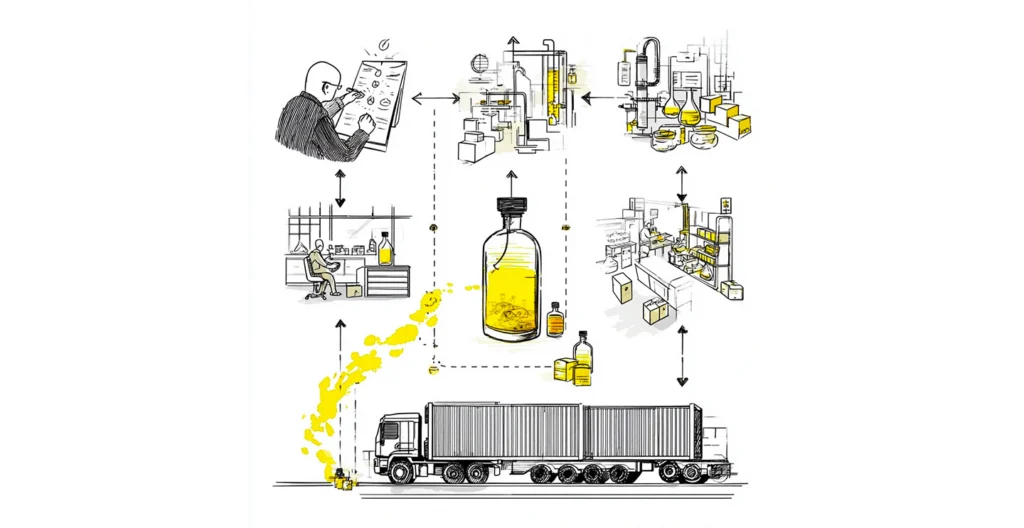
It is financing the construction of the entire industrial infrastructure of the project.
This includes:
- fragrance development;
- design of the packaging;
- supplier search and qualification;
- samples and prototypes;
- stability and compatibility testing;
- regulatory compliance;
- product industrialization;
- fine-tuning of production processes;
- quality validation;
- building the supply chain.
These are activities that will keep generating value for years. Yet they are often treated as a simple production cost. That is what completely distorts the economic reading of the project.
Investment and industrial cost are not the same thing
During the discussion with the client, we shared a reflection that we consider fundamental. There are two completely different economic categories.
The first is the investment needed to launch. The second is the ongoing industrial cost.
The first builds the business. The second keeps it running.
Confusing the two inevitably leads to cost targets that are hard to reach, especially when you want to develop a fully customized product made in Italy.
Industrial economics come later
Let’s imagine two scenarios.
Phase 1
Brand launch: 5,000–10,000 units.
Custom packaging, Bespoke fragrance, New suppliers, New processes, High development effort, Low production efficiency.
That is perfectly normal.
Phase 2
Industrial production: 100,000 units.
Consolidated suppliers, Optimized supply chain, More efficient purchasing, Validated processes, Economies of scale.
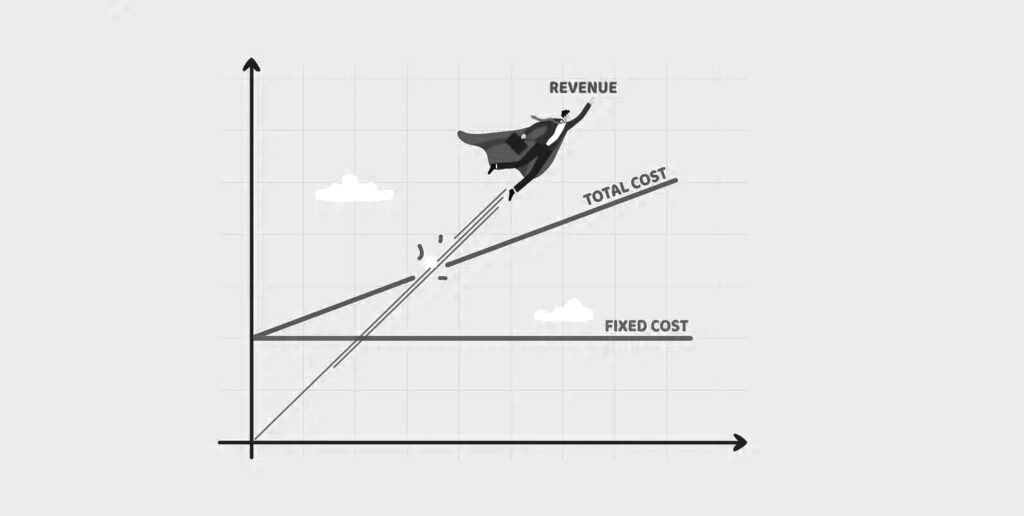
At this point the unit cost falls naturally, because the initial investments have already been absorbed. This is where the financial model really starts to take the shape every entrepreneur wants.
Why we did not negotiate the price
Our response was not: “We cannot reach that cost.”
Nor: “This is our best price.”
We proposed something different. A working session. The goal was not to discuss a price list.
It was building, together, the right financial model for this phase of the project.
During the call we worked on four aspects:
- separating initial investments from recurring industrial costs;
- building an economic model consistent with a launch project;
- defining the industrial roadmap needed to reach the target costs in the medium term;
- identifying the production volumes that will make full use of economies of scale.
Because producing a fragrance is only part of the job.
This is where the difference between a manufacturer and a platform shows
A manufacturer receives a specification and returns a quote. An industrial platform starts much earlier.
It helps the client answer questions such as:
- Is the economic model sustainable?
- Which part of the costs is an investment and which is a recurring cost?
- When will the real economies of scale begin?
- Which volumes will make the business sustainable in the long run?
- How do you design the brand’s industrial path, not just its first order?
These questions are not about production. They are about the success of the project.
This is the value of a platform
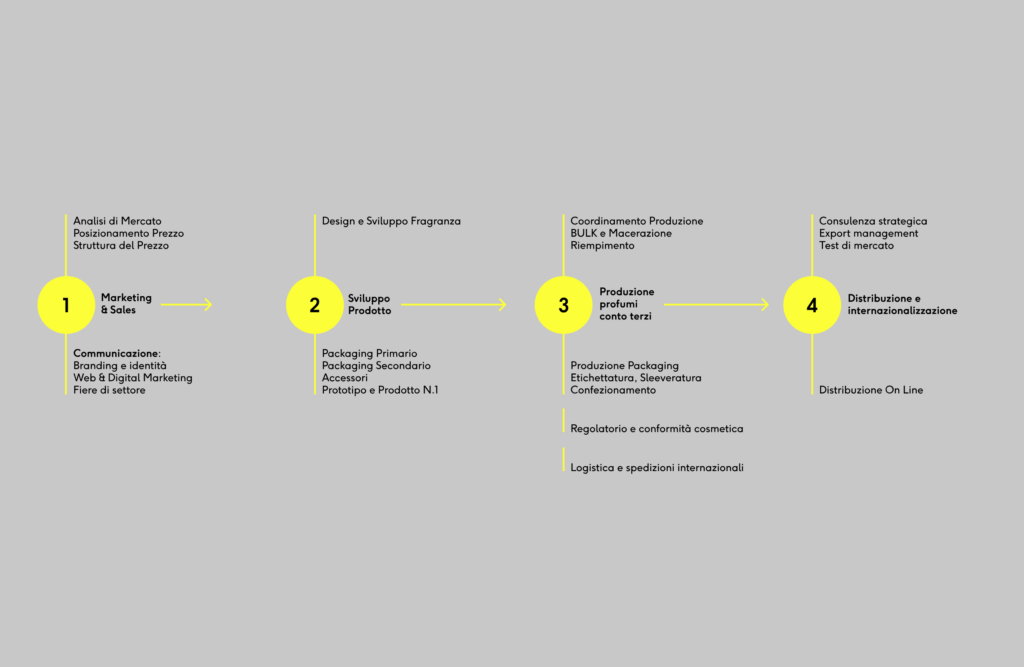
At BOLD, we don’t believe our job is simply to produce perfumes.
We believe our task is to design the industrial, economic, and operational architecture that will allow a brand to grow over the years. Because the success of a launch rarely stems from the lowest production cost.
It almost always comes from an economic model built correctly from day one.
And that's exactly the meaning of End-to-End Manufacturing Platform.