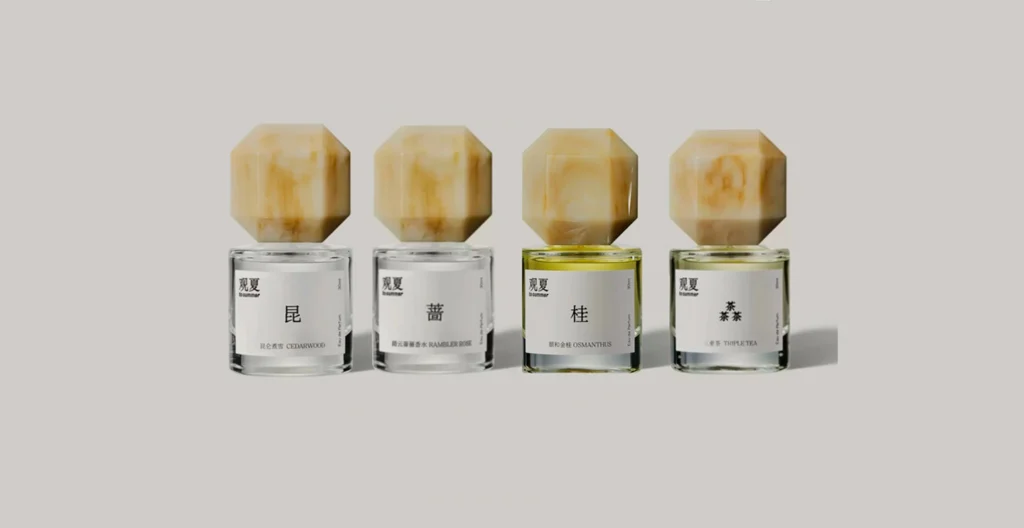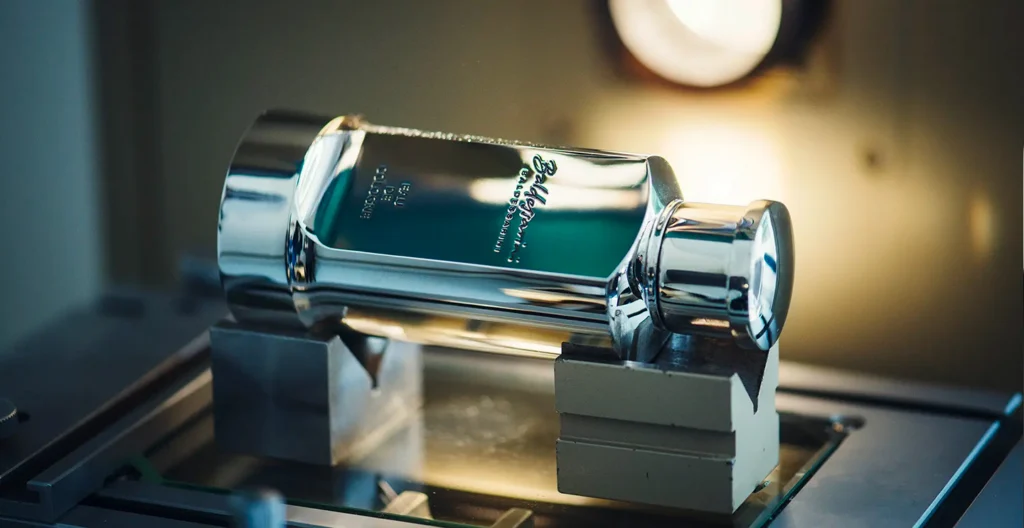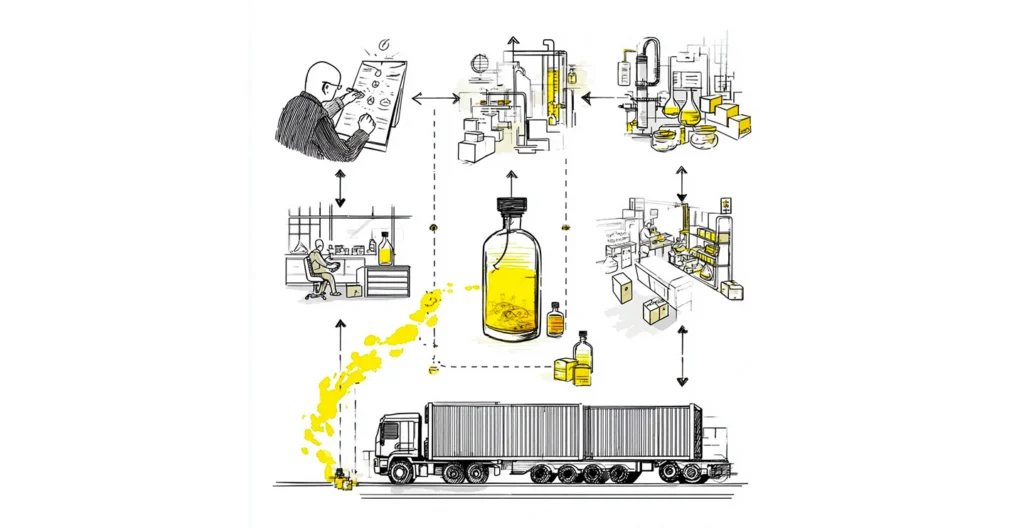
In fragrance, packaging is part of the product’s identity. But packaging that looks outstanding in a rendering can become a problem in production if its geometry, materials, decorations, tolerances, and assembly weren’t designed with scale in mind. Design and industrialization aren’t two consecutive phases: they need to talk to each other from day one.
Design for Manufacturing in fragrance.
A bottle, a cap, or a carton must also be assessed for stability, tolerances, compatibility, assembly speed, and repeatability. The real question is whether the solution can be produced well not just in the sample, but across thousands of units.
Decorations, scrap, and lead times.
Lacquering, screen printing, metallization, and special finishes can raise perceived value, but they also add lead time and risk. Every decoration should serve a clear purpose in the positioning.
Customization and MOQs.
Fully custom components add uniqueness, but they require tooling, MOQs, and time. In many cases, a well-designed semi-custom solution can preserve identity while adding flexibility.
Packaging as a system.
Bottle, pump, collar, cap, and carton aren’t independent elements. Tolerances and fits have to work together, and they must be verified before mass production.
The End-to-End perspective.
An End-to-End platform brings product designers, packaging engineering, sourcing, production, and quality into the same decision-making process. The goal isn’t to limit creativity, but to turn it into a product that is industrially reliable and scalable.
A checklist before design freeze.
Before giving final approval to a packaging design, it pays to check MOQs, tooling, lead times, tolerances, compatibility, decorations, assembly speed, protection in transit, recyclability, and the availability of alternatives. Design freeze should therefore also be an industrial freeze: from that point on, any change can affect costs, timelines, and validations.
A practical example.
A very heavy cap may fit a luxury positioning, but if it requires slow manual insertion or creates instability in transit, the real cost only surfaces in production. That assessment has to happen earlier.
Key takeaways.
– A sample alone doesn’t prove industrial manufacturability.
– Every decoration comes with a cost, a lead time, and a risk.
– MOQs and tooling must be assessed during design.
– Packaging must be conceived as a system of components.
FAQ
What does it mean to industrialize packaging?
Turning the concept into specifications, materials, tolerances, processes, and controls that are repeatable at scale.
Is custom packaging always better?
No. It makes sense when it creates enough distinctive value to justify the MOQs, tooling, lead times, and complexity.
When should compatibility testing take place?
Before mass production, on the components and in the exact configuration planned.
Conclusion.
The best packaging is the one consumers want and the supply chain can reproduce consistently. Creativity creates the mark; industrialization allows it to exist at scale.